
There is a particular stillness in the Indian forest just before a tiger appears.
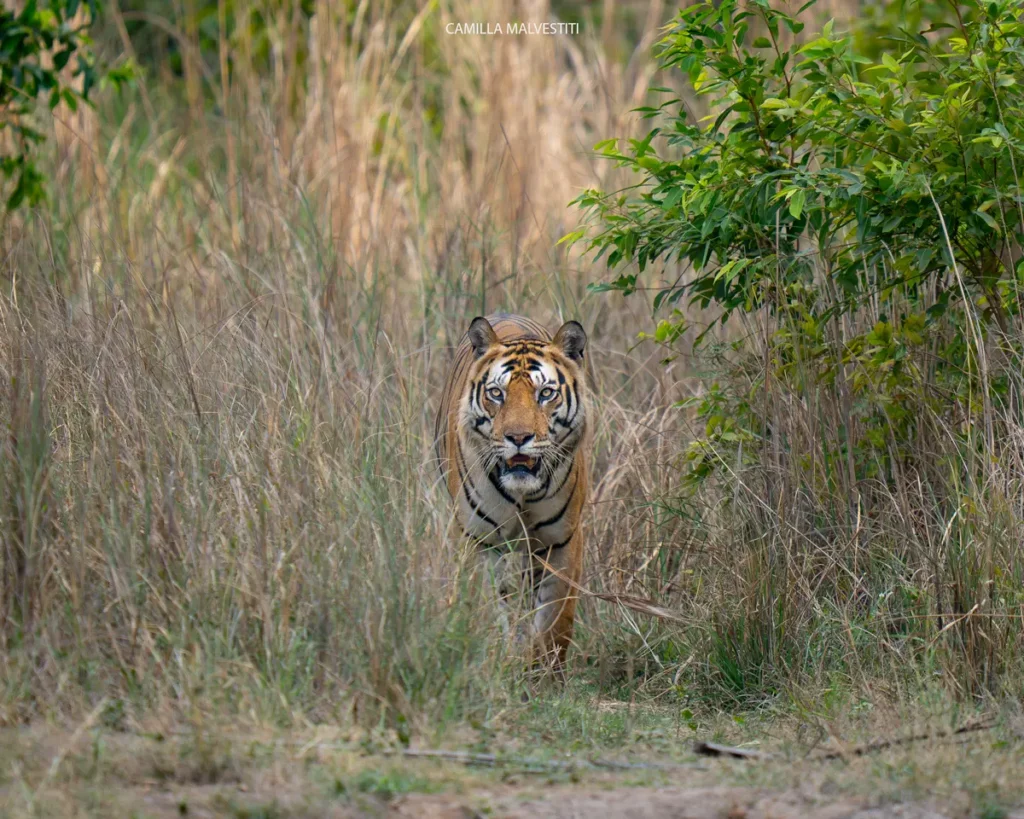
The alarm calls of deer echo through the trees, langurs stare into the distance, and for a brief moment, everything feels suspended. Then, almost imperceptibly, a tiger steps into view — silent, self-assured, entirely at ease.
For many travellers, this is the moment they have crossed continents to witness.
And while there is never a guarantee in the wild, choosing the right time of year can profoundly shape your experience.
Understanding the Rhythm of the Jungle
India’s tiger reserves follow a clear seasonal pattern, each offering a different atmosphere — and different opportunities.
March to June — For the Highest Chance of Sightings
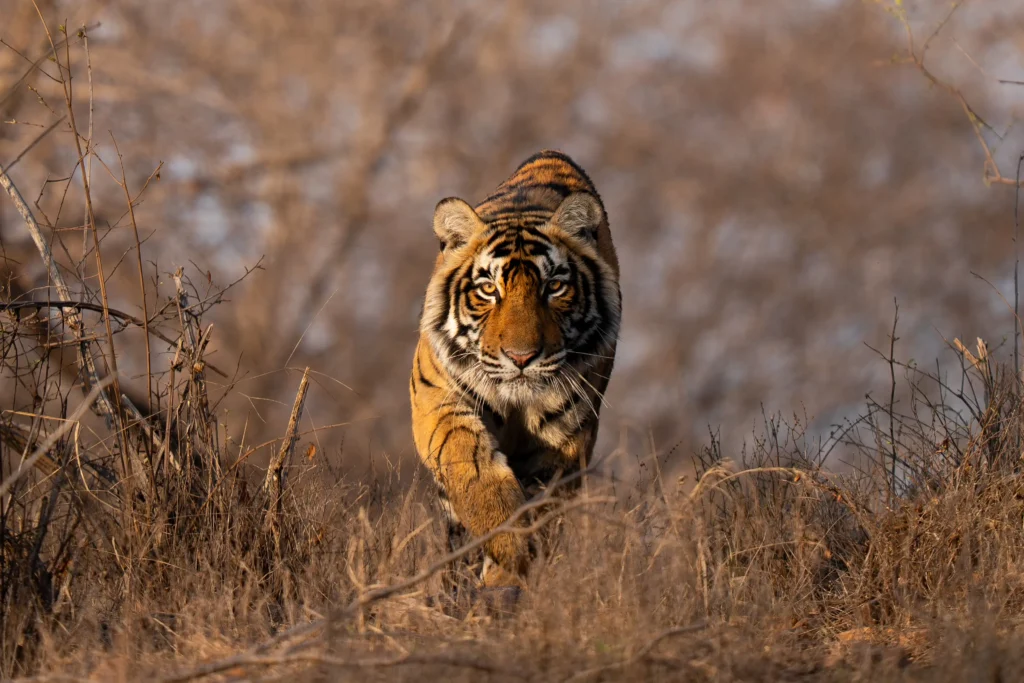
As the dry season progresses, water becomes increasingly scarce. Tigers, along with other wildlife, begin to rely on a limited number of water sources. Their movements become more predictable, and sightings more frequent.
The forest itself changes character — foliage thins, visibility improves, and encounters often unfold in open spaces.
It is not uncommon, during these months, to observe a tiger resting by a waterhole or walking along a dusty track in full daylight.
For travellers whose primary goal is to see tigers — and to see them well — this is the most rewarding time to visit.
What to expect:
The highest probability of tiger sightings
Raw, dramatic encounters
Excellent conditions for wildlife photography
Consideration: Temperatures can be high, often exceeding 35°C. Yet it is precisely this intensity that draws wildlife into view.
December to February — For gorgeous Atmosphere and Comfort
Winter offers a different kind of safari — quieter, more atmospheric, and deeply immersive.
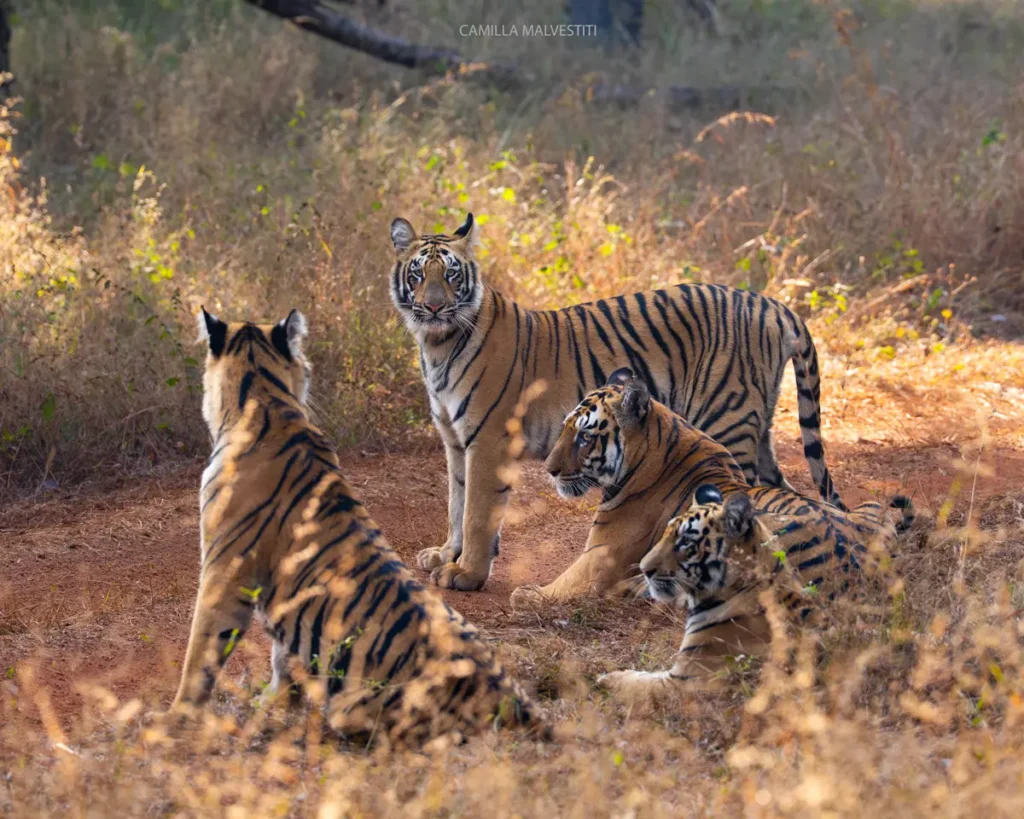
Cool mornings, soft golden light, and occasional mist create a cinematic quality in the forest. The landscape is greener, birdlife is abundant, and the pace feels more unhurried.
Tiger sightings remain very possible, but the denser vegetation can make them more elusive. Tracking becomes more subtle — less about predictability, more about reading the forest.
This is a beautiful season for travellers who value the experience as much as the sighting itself.
What to expect:
Comfortable temperatures and refined travel conditions
Beautiful light for photography
A richer overall wildlife experience
Consideration: Sightings may require more patience and skilled guiding. Tigers are more active during this time of the year, they might be seen moving around to mark the territory or searching for a prey. Thei winter coat is a lush bright orange.
October to November — A Lush, Underrated Window
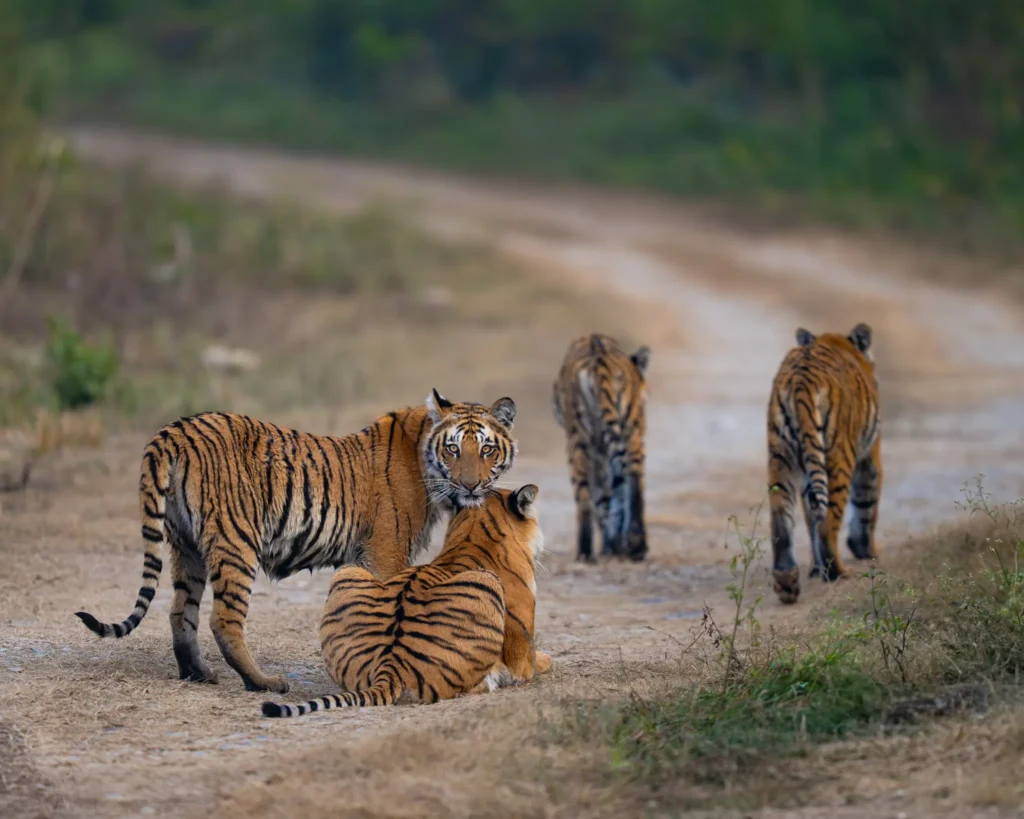
This is one of the most visually striking times to be in the jungle. The landscape is at its greenest, water is still widely available, and wildlife moves more freely through thick vegetation. While tiger sightings can be less predictable compared to the peak summer months, the experience feels quieter, more exclusive, and deeply immersive.
For travellers who are less focused on maximising sightings and more interested in atmosphere, photography, and the richness of the ecosystem, this is a beautifully understated time to visit.
PLEASE NOTE:
Most of the parks close their gates during the monsoon rains (July to end of September). While some zones might still be open, this is NOT the right time to plan a safari trip to India.
Beyond Season: What Truly Shapes a Safari
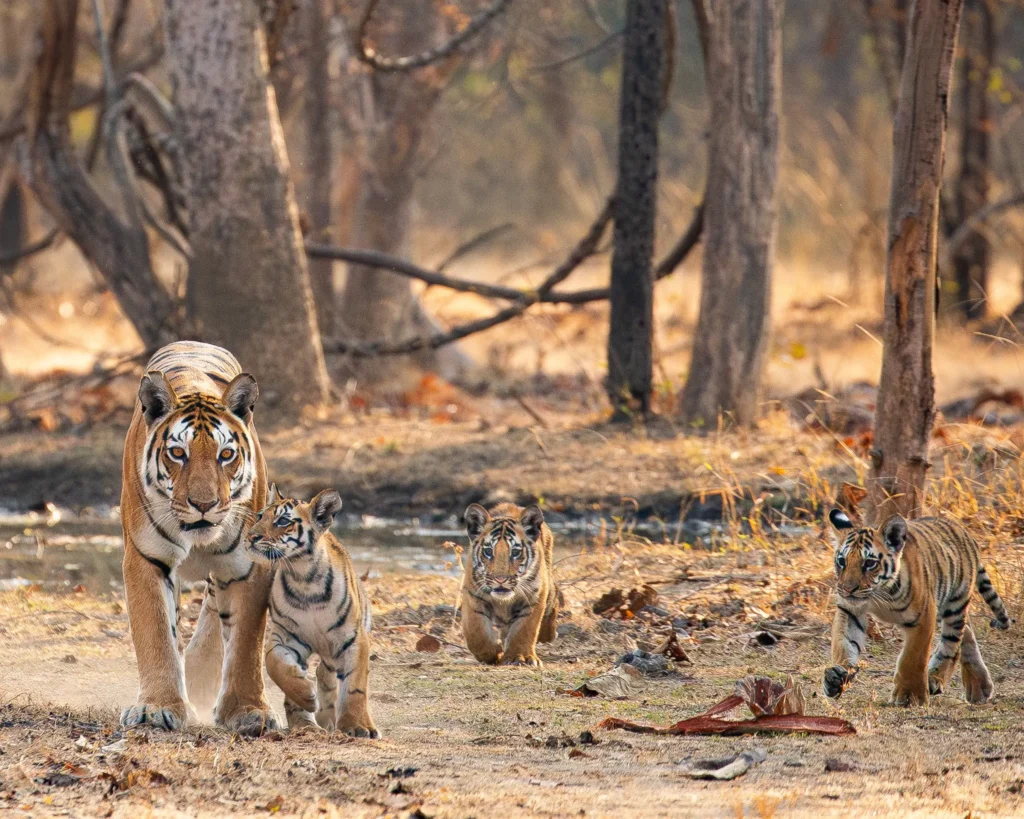
While timing matters, it is only one part of a much larger picture.
The quality of your experience depends equally on:
The choice of park and zone
The experience of your naturalist
A well-planned safari in February, guided with insight and patience, can be far more rewarding than a poorly planned one at the height of summer.
Choosing the Right Time for You
For most of our guests — particularly those travelling from Europe and North America — we tend to recommend:
Late March to early May for the strongest balance of sightings and manageable conditions
December to February for a more temperate, atmospheric journey
Each season offers something distinct. The key is aligning your expectations with the rhythm of the forest.
A Final Thought
A tiger sighting is never simply a matter of being in the right place.
It is about understanding the forest — its silences, its signals, its subtle shifts. It is about patience, experience, and the ability to recognise when something is about to unfold.
And when it does, it rarely feels like a spectacle.
It feels quiet. Personal. Almost as though the forest has chosen to reveal something — just for a moment — before returning to stillness once again.
Planning Your Journey
Designing a meaningful safari requires more than selecting dates on a calendar.
It is about choosing the right locations, the right pace, and the right people to guide you through landscapes that reveal themselves slowly, and often unexpectedly.
If you are considering a journey into India’s tiger reserves, thoughtful timing is the first step — but never the only one.
