
Photographing tigers in the wild is one of the most rewarding experiences in wildlife photography. India offers the best tiger safari destinations in the world, but capturing powerful images requires more than luck.
In this guide, we share essential tiger safari photography tips in India — from choosing the right gear to understanding animal behaviour — to help you make the most of your time in the field.
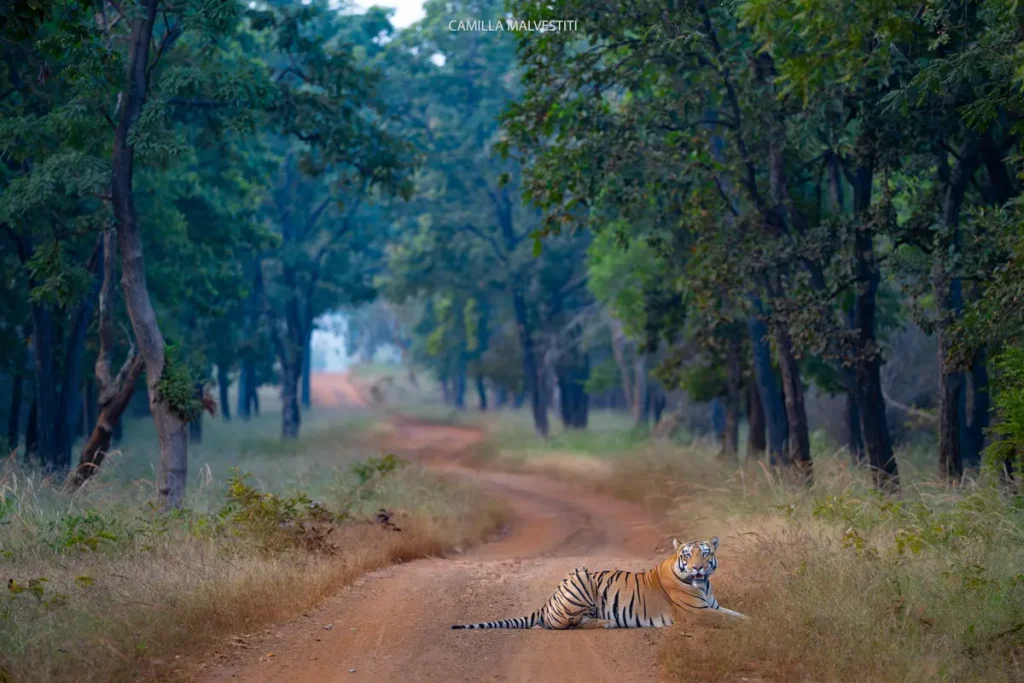
Best Camera Gear for Tiger Safari Photography in India
A strong camera setup is essential for successful tiger photography in India, where subjects might be at any distance and sightings can be brief.
Recommended gear:
DSLR or mirrorless camera with fast autofocus
If you are carrying only one body and one lens: telephoto lens (ideally 100-400 mm or 150-600 mm or 200-600 mm)
- If you are carrying two bodies, then 70-200 telephoto lens and a prime lens (300, 400 or 500 mm)
Spare batteries and memory cards
I would not recommend the use of a tripod or monopod. There is relatively less space in the classic Indian safari jeep and I suggest to have a minimal set up. To stabilize your camera, it might be useful tobring a beanbag. This accessory is small, it can be carried emty and then filled up with rice or cloths when you arrive at your location.
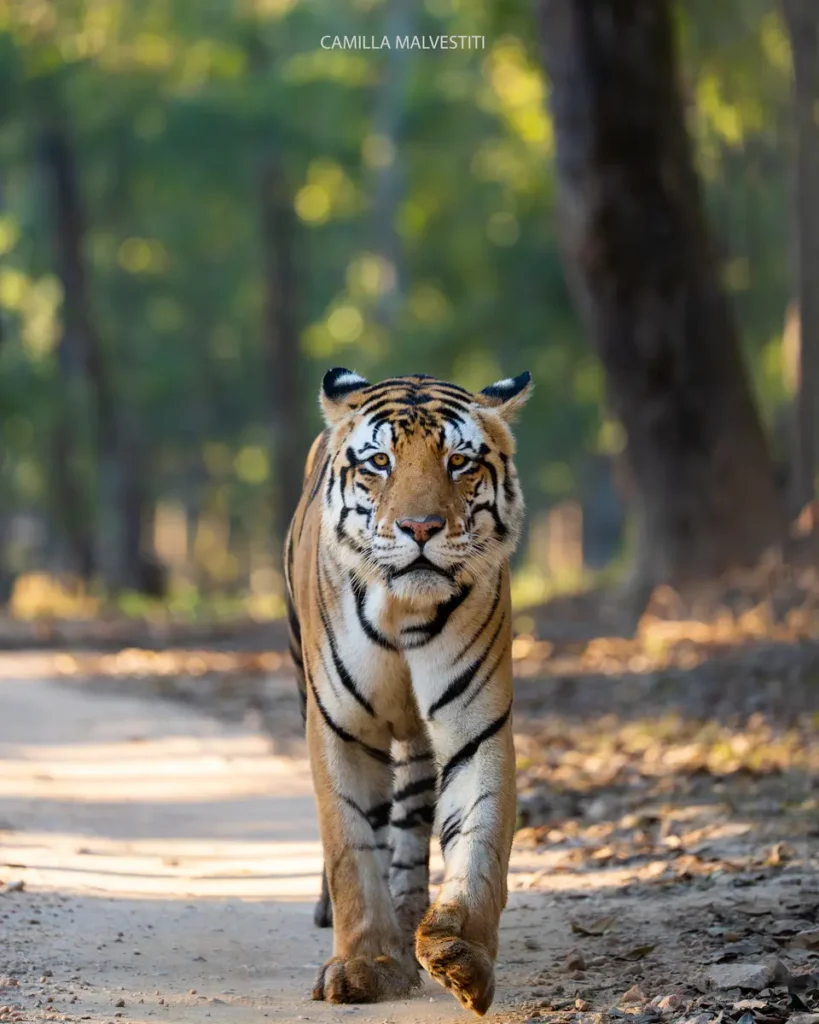
Use Golden Light for Better Tiger Photos
The best time for tiger photography in India is during early morning and late afternoon safaris.
This so called “golden hour” offers:
Soft, warm light
Better animal activity
More atmospheric images
Avoid harsh midday light, which creates strong shadows and reduces detail.
Understand Tiger Behaviour for Better Shots
Great wildlife photography depends on anticipation.
In Indian national parks, watch for:
Alarm calls from deer and langurs
Fresh pugmarks on safari tracks
Movement near waterholes in summer
Understanding tiger behaviour helps you prepare your shot before the moment unfolds.
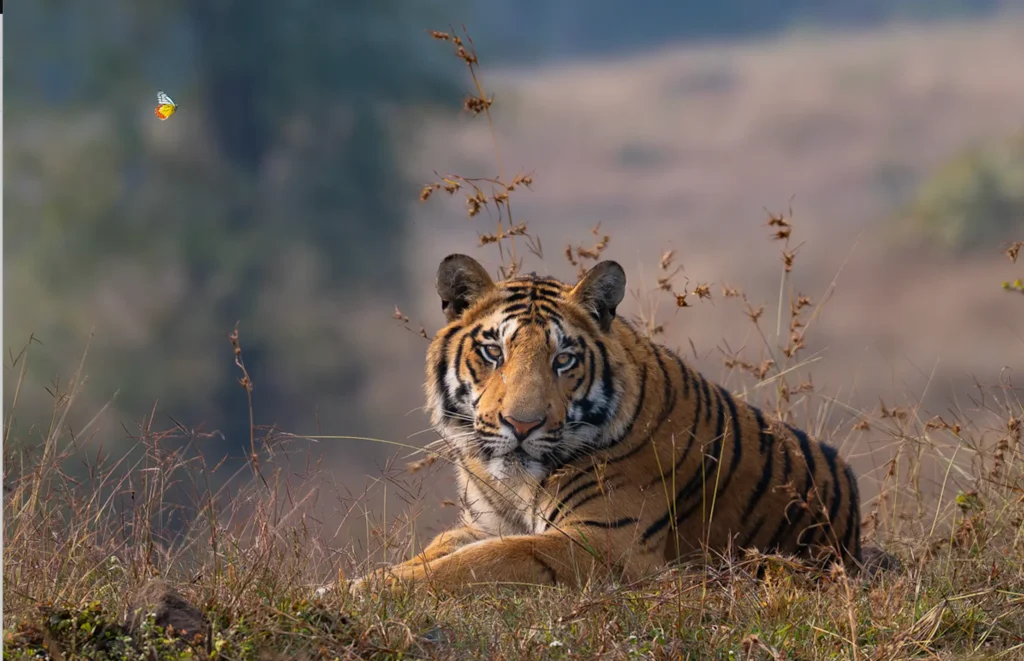
Positioning Your Safari Vehicle for the Best Angles
Your position in the safari jeep can dramatically affect your photos. Tips:
Aim for eye-level compositions
Keep the sun behind you
Work with your guide for positioning
The best naturalists and drivers will anticipate movement and place the vehicle accordingly.
Best Camera Settings for Tiger Safari Photography
Shutter speed: 1/1000 or faster
Aperture: f/4 – f/6.3
ISO: Adjust based on light
👉 Prioritize sharpness — motion blur is one of the most common mistakes in tiger photography and one of the few that cannot be corrected during post-processing.
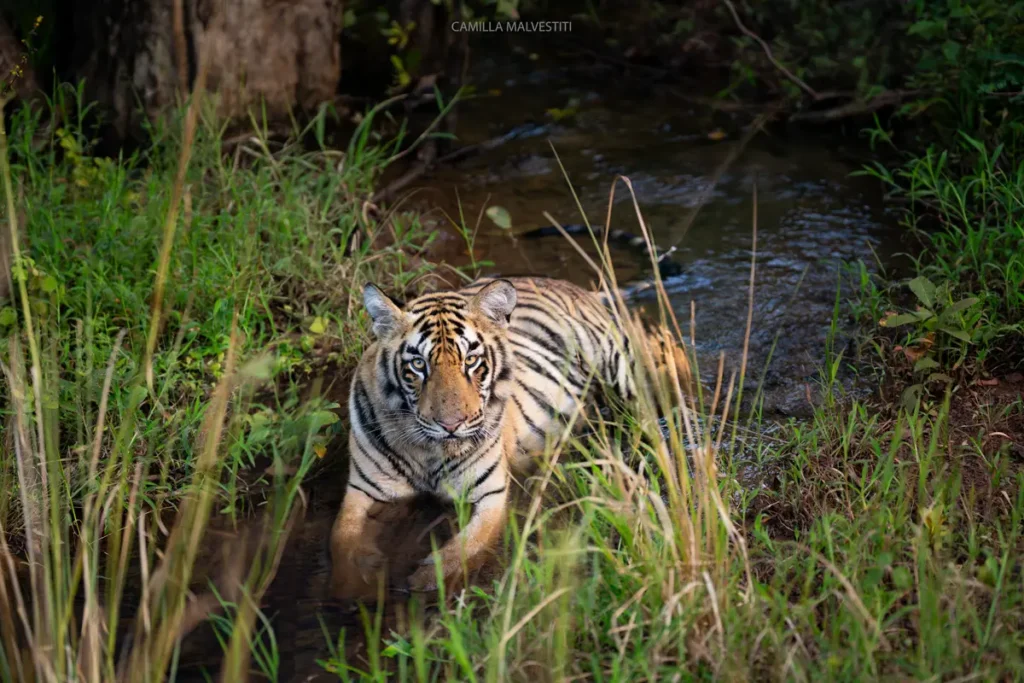
Patience and Timing in Tiger Safaris
Tiger sightings are unpredictable.
You may wait hours for a few seconds of action — so always stay ready.
Keep your camera ready and settings prepared.
Photograph More Than Just Tigers
To build a strong wildlife portfolio, include:
Other mammals
Birdlife
Landscapes
Environmental shots
This creates a richer visual story of your safari experience.
Final Thoughts on Tiger Safari Photography in India
Tiger photography is about more than capturing an image — it’s about understanding the rhythm of the forest and being present in the moment.
With the right preparation and expert guidance, your safari can become an unforgettable photographic journey.
Plan Your Tiger Photography Safari in India
f you’re looking to photograph tigers in India with expert guidance, we design tailor-made wildlife safaris led by experienced naturalists across India, Africa, and the Himalayas.
