Snow Leopard Quest, Kibber.
A chance to see the world's most elusive Big Cat, Explore with some of the best Snow Leopard trackers on the planet.
31 Jan to 10 Feb 2027
Best trackers, batch led by Camilla Malvestiti
- Kibber
Overview
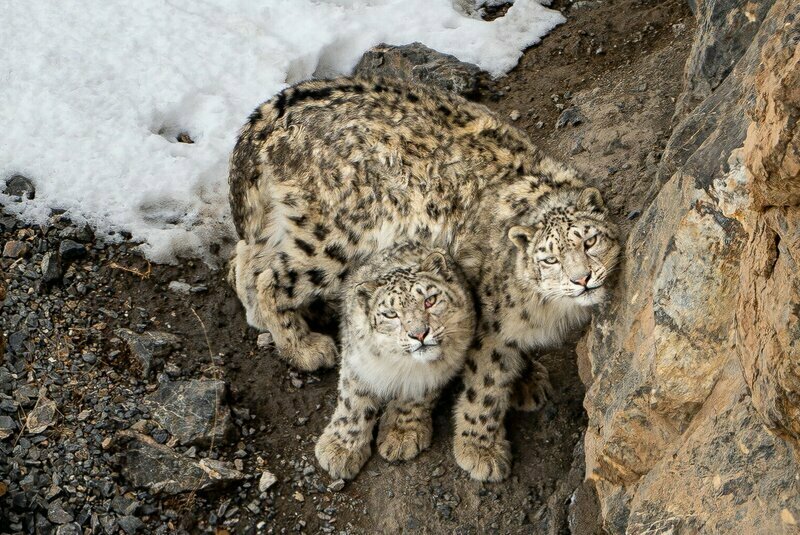
High up in the Spitian Himalayas, away from all civilization and modern-world fancies, sits a pretty little village called Kibber. At an imposing 14,200 feet from the mean sea level, Kibber is probably the highest perennially inhabited village in India. It is here, in the high and lofty mountains surrounding Kibber that a lot of wild snow leopards have made their home. Braving ice and snow, the high altitudes and the immense cold, we step out into the giant freezer to catch a glimpse of the world’s most elusive, and inarguably, the most sought-after Big Cat. The snow leopard, at most places it lives, is almost a myth, seldom seen but always talked about. Akin to a spirit, the locals revere it, worship it, love it! But, in the mountains around Kibber, as the winter and the great snow makes an impact, the snow leopards descend to lower altitudes and are seen quite frequently. Here in Kibber, it is no longer a myth, but instead a fascinating animal which, when tracked efficiently, is seen and photographed much to our delight!
(Fun fact: We have sighted at least 1 snow leopard on all 45 of our previous Snow Leopard expeditions, making the success rate 100%!)
Itinerary
1. Day 1 Chandigarh to Rampur, 255 Kms, 6-7 hours.
A graceful departure from the plains of Chandigarh ushers you into the gentle embrace of the
Himalayas. The drive unfolds along scenic river valleys and winding mountain roads, culminating in a restful evening at Nau Nabh Hotel.
2. Day 2 Rampur to Kaza village/Maney Village, 290 Kms, 8-9 hours
Today’s journey ventures deeper into the high-altitude desert of Spiti, where landscapes grow increasingly dramatic and otherworldly. We visit the surreal monasteries that abound these high passes. Crossing rugged terrain and ancient mountain passes, you arrive in Kaza, the cultural heart of the valley, for an overnight stay at Sakya Abode.
3. Day 3 Dhankar Monastery - Kaza - Kibber, 85 Kms, 5 hours.
A shorter yet striking drive leads you to Kibber, one of the highest inhabited villages in the world. The stark beauty of the terrain and the crisp mountain air set the tone for the extraordinary days ahead.
4. Day 4 to 9 At Kibber - Snow Leopard spotting.
These days are devoted to the rare and enthralling pursuit of the elusive snow leopard. Guided by expert trackers, you traverse pristine snow-clad landscapes, immersing yourself in the silence and splendour of the high Himalayas, while enjoying warm hospitality in a traditional homestay.
5. Day 10 Kibber to Rampur, 300, Kms, 9 hours.
The return journey retraces your path through Spiti’s majestic terrain, offering one last opportunity to absorb its stark, haunting beauty. By evening, you arrive back at Rampur Bushahr for a comfortable stay at Nau Nabh Hotel.
6. Day 11 Rampur to Chandigarh, 200 Kms, 6-7 hours.
Your final drive descends from the mountains to the plains, bringing the expedition to a close. With memories of a truly remarkable Himalayan experience, you are dropped at Chandigarh airport for your onward journey.
Highlights
- This is the world’s most elusive big cat and also the most cherished. You need a thoroughly professional outfit which is well experienced regarding the terrain and the difficulties of the expedition.
- We have been lucky to spot/photograph atleast 1 snow leopard on all of our previous 45 quests from 2012-2026 (both in Ladakh and Spiti).
- We employ some of the best snow leopard trackers in the world which greatly increases the chances of a successful quest.
- Our camp team is extremely experienced and thus you will get brilliant food on the expedition. Also, the porters and the other staff would be of great help to you.
- We will ensure that you get good images (if a sighting happens) while maintaining safety standards.
- Oxygen cylinder and other basic First-Aid on camp.
- We love what we do and the passion and the energy would be contagious!
- 24x7 emergency evacuation assistance.
- 1 dedicated porter per guest.
- Zero hidden costs. Everything from Chandigarh to Chadigarh is included in our tour costing.
- No compromise on safety, hygine and quality anywhere.
- Be enthralled by our on-camp sessions on wildlife, snow leopards and the fabled Himalaya!
DOUBLE SHARING BASIS- BASIC
INR 185,000 (per person) For Indian Nationals
INR 215,000 (per person) for Non indian nationals
Standard Rooms
Please note :
Booking to be done with 50% advance payment, rest can be cleared by 4th January 2027
Inclusions
- Transfer from Chandigarh to Kibber and Back to Chandigarh (Innova).
- 2 nights Hotel at Rampur Bushahr - Nau Nabh on Double Occupancy basis (Dinner and Breakfast)
- 1 night Hotel in Kaza – Sakya Abode - Central heated hotel on Double Occupancy basis (Dinner and Breakfast)
- 7 nights Homestay in Kibber on Double Occupancy basis (Basic Meals: Dinner, Breakfast and Lunch).
- 1 porter per participant.
- Expert Snow Leopard Spotters.
- Electrical Heaters & Heated washrooms.
- Village Council Fees and Camera Fees
- Forest Department Entry Fees.
- Homestay staff for any assistance.
- Common Dining Hall with firewood heating.
- Services of a tour leader and photography mentor on tour (Camilla Malvestiti)
- Inner-line permits for non-Indian guests.
Exclusions
- Any airfare.
- Evacuation and travel insurance.
- Expenses personal in nature.
- Tips and gratuities.
- Expenses arising out of roadblocks, landslides, bad weather, ill health or any such factors beyond human control.
- Anything not mentioned in ‘inclusions’.
Travel to and from Chandigarh:
While the travel upto Chandigarh on Day 1 and travel back from Chandigarh on Day 11 is extra, we can assist you to book the flights or book it for you. Please contact our head office at info@beyondwild.in for further details regarding the arrangements and we shall be more than happy to help you.
Booking Procedure
Cancellation - Refund (On Tour Cost)
- If cancellation is communicated 10 days (or less) before departure OR No Show - No Refund.
- If cancellation is communicated 20 to 11 days before departure - 20% of tour cost refunded.
- If cancellation is communicated 30 to 21 days before departure - 40% of tour cost refunded.
- If cancellation is communicated 30 to 59 days before departure - 60% of tour cost refunded.
- If cancellation is communicated 60 days (or more) before departure - 80% of tour cost refunded.
- If cancellation is communicated 120 days (or more) before departure - Full Refund.
Frequently Asked Questions
Your questions answers about stays and more