SNOW LEOPARD LADAKH
1 March to 10 MARCH
Best trackers, batch led by Camilla Malvestiti
- Ladakh
THE SNOW LEOPARD QUEST
- Where? Hemis, Ulley, Ladakh
- Min. temperature? -20°C
- Max. temperature? 12°C
- Top wind speed? 10 km/hr
- Avg. daily hiking? 1–3 kms
- Avg. stay altitude? 10,500 ft
- Max. altitude gained? 14,000 ft
Itinerary
1 March: Arrival in Leh (3,500m)
- Arrive and begin
- Optional sightseeing or rest.
- Overnight in Leh.
2 March: Acclimatization & Briefing
- Morning briefing on snow leopard behaviour and conservation
- Day trip to Gya village — birding & landscape
- Chance to spot snow leopards, Tibetan Partridge, Great Rose Finch, etc.
- Overnight in Leh
3 March: Drive to Hemis Shukpachan / Ulley (3,600m)
- Birding stop at Spituk Marshes
- Settle into a traditional Ladakhi guesthouse
- Evening wildlife scanning session
- Overnight in Hemis / Ulley
4-8 March: Snow Leopard Tracking
- Full-day excursions with expert spotters
- Explore Hemis Shukpachan & surrounding valleys
- Photography, birdwatching & cultural immersion
- Overnight in
9 March: Return to Leh
- Morning excursion with expert spotters
- Scenic drive back
- Leisure/shopping
- Overnight in Leh
10 March: Departure
Transfer to Leh Airport.
DOUBLE SHARING BASIS- BASIC
150,000 INR (per person)
Standard Rooms
Above costs are based on double occupancy basis.
Please contact our office for single supplement, if needed.
Note : if any changes in the local council fees or camera charges, the difference will be levied at actual.
(Booking to be done with 50% advance payment, rest can be cleared by 1th February 2026).
Inclusions
- Accommodation in 2/3 double/single rooms. - Meal Plan AP (Breakfast, lunch and Dinner) as per tour plan for all 9 nights.
- All transfer/sightseeing as per itinerary (point to point) using Non – Ac Innova crysta. (vehicles will be with the guests full time).
- 1 Snow Leopard Tracker and Porters.
- Inner line permit / Environmental permit, Ladakh Entry Fees, Wildlife Fees & Red Cross society fee.
- Hotels in Ladakh will have hot and cold water.
Exclusions
- Any domestic and international airfare.
- Evacuation and travel insurance.
- Expenses - personal in nature.
- Tips and gratuities.
- Expenses arising out of roadblocks, landslides, bad weather, ill health or any such
- Camera Fees charged by the forest department.
- Anything not mentioned in ‘inclusions’.
Travel to and fro Chandigarh:
While the travel upto Chandigarh on Day 1 and travel back from Chandigarh on Day 12 is extra, we can assist you to book the flights or book it for you. Please contact our head office at info@beyondwild.in for further details regarding the arrangements and we shall be more than happy to help you.
Customize your private snow leopard quest:
If you wish to tailor-make a tour in search of the snow leopard, we shall be more than happy to arrange the same with our best team of trackers as per your dates.
PHOTOGRAPHY and animal observation
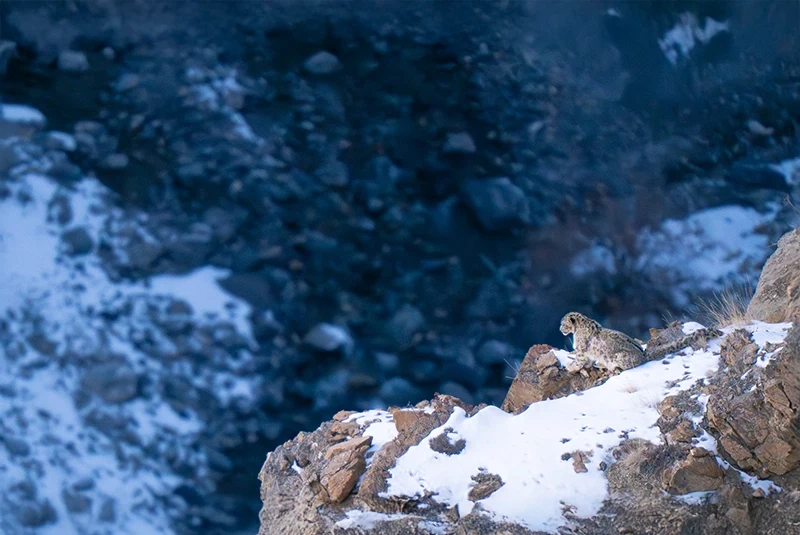
- Please carry a telephoto lens as most animals and birds are at quite a distance.
- Also carry a landscape lens for night photography and landscapes.
- A good, sturdy tripod is a must.
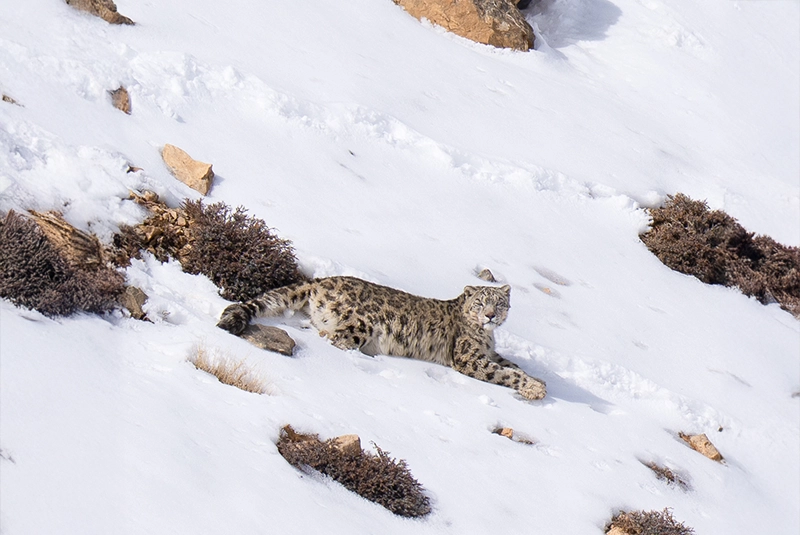
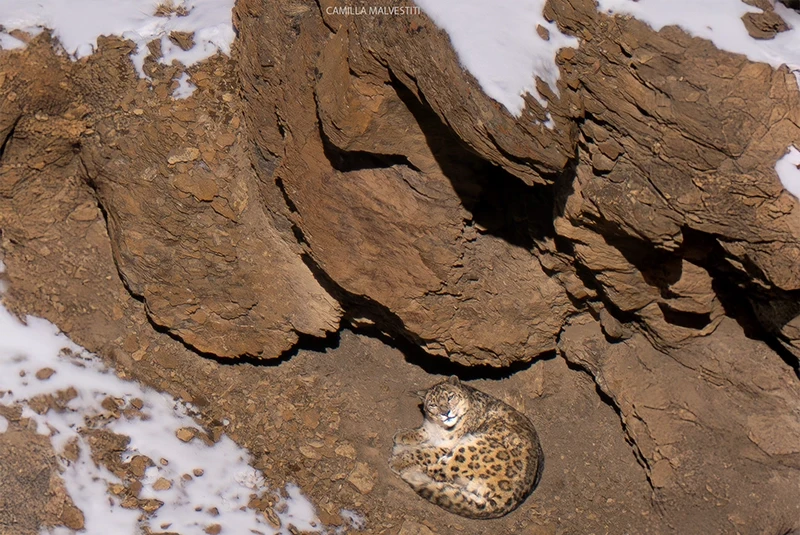
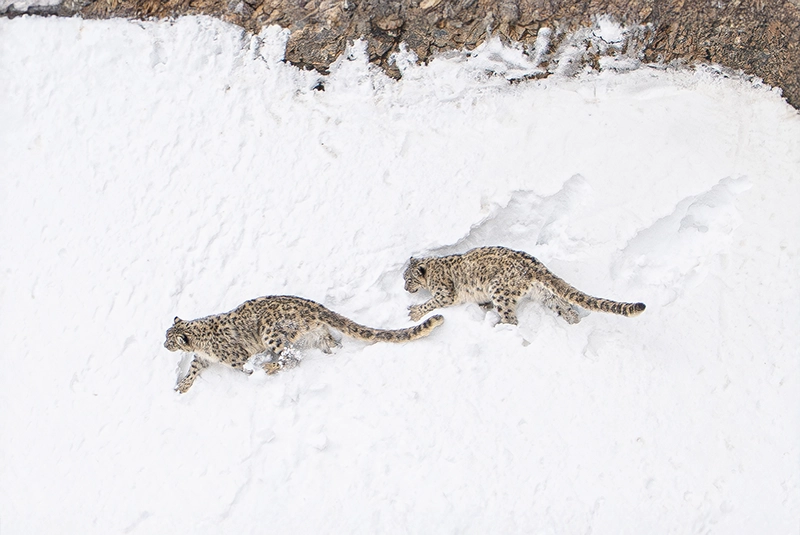
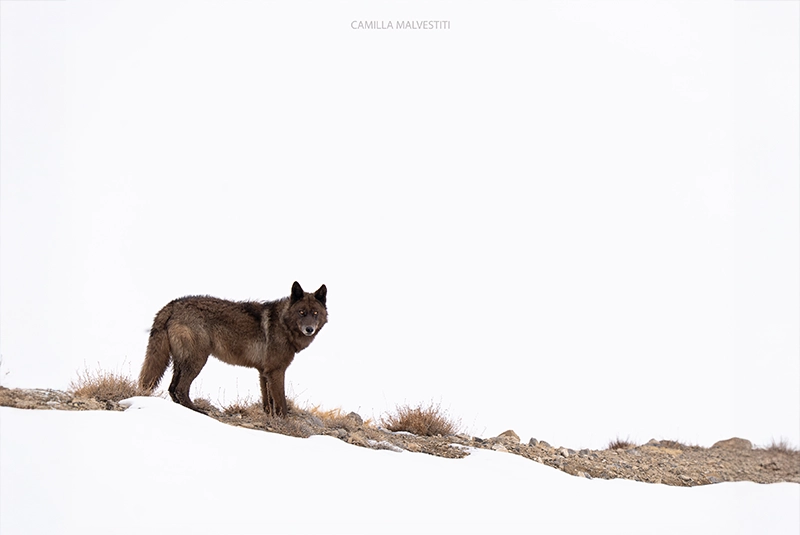
- Scenes like that shown on the right are common.
- A good pair of binoculars is essential.
STAY
- 03 nights at Leh: Pangong Hotel and similar
- 08 nights at Ulley: Shapo Lodge and similar
TENTATIVE SCHEDULE FOR SNOW LEOPARD TRACKING
IT ALL DEPENDS ON THE SNOW LEOPARD’S MOVEMENTS
- Early morning (at daybreak ) our spotters go out in search of the Snow Leopard. They make use of known scanning sites, pugmarks, scat remains as also the tell-tale signs of the blue sheep and other prey of the Snow Leopard.
- After breakfast, we head out to the spotting site. Lunch is normally served on field.
- The locals’ knowledge, the Snow Leopard’s usual tracks and a lot of other things would come handy.
- Return to the homestay around dusk and relive the day’s movements around a heater sipping local Ladakhi soup.
- Sleep.
List of things you need to bring.
- Two woolen hats that cover ears
- Two neck gaiters (fleece neck tube to protect lower face)
- An anorak
- An expedition parka
- A pair of goggles or sunglasses that block sidelight
- A pair of expedition mittens
- Pair of woolen gloves and socks
- Two sets of top and bottom thermal underwear
- One pair of thick fleece pants
- One fleece pullover or jacket
- Good, warm trekking boots
- A pair of camp booties with gaiters
- A good pair of binoculars
- If possible, a good spotting scope
- Camera with spare batteries
- A daypack with side pockets for water bottles
- A good flashlight or headlight
- Sunscreen lotion
- A notebook and pen
Booking Procedure
50% of the tour cost.
Balance can be paid upto a month before departure.
Cancellation - Refund (On Tour Cost)
- If cancellation is communicated 10 days (or less) before departure OR No Show - No Refund.
- If cancellation is communicated 20 to 11 days before departure - 20% of tour cost refunded.
- If cancellation is communicated 30 to 21 days before departure - 40% of tour cost refunded.
- If cancellation is communicated 30 to 59 days before departure - 60% of tour cost refunded.
- If cancellation is communicated 60 days (or more) before departure - 80% of tour cost refunded.
- If cancellation is communicated 120 days (or more) before departure - Full Refund.
Frequently Asked Questions
Your questions answers about stays and more
What’s the difference between a group tour and a private tour?
Group tours are fixed date departures to some of our most popular destinations. You can buy a seat for one of those and you will share the jeep with other participants.
A private tour is a totally customized trip that we will craft around your preferences. You can choose the dates, the park and the accommodation category.
How much in advance shall I plan a safari trip?
It is important to plan your trip well in advance. For the Indian national parks, we recommend a minimum of 4 to 6 months prior to the date. Visiting a national park in India requires the booking of permits. These are issued in a limited number to control the capacity of the park and they get sold out quite fast.
For Africa, we recommend booking at least 6 months in advance during peak season (June to September) and 2-3 months for the rest of the year.
Can you organize a safari trip using luxury properties?
Absolutely. We work with the best hotels and camps in every destination and we are able to include the best luxury properties for your holiday.
What makes your safari trips special?
We have extensive experience as tour operators, naturalists and wildlife photographers. We (the founders) are on field for months every year and have a deep knowledge of all the destinations and of their sightings opportunities. We work with the best team of guides, drivers and trackers with whom we have established a personal relationship over the years.
I am a wildlife photographer. Can you tailor- make a trip based on my requirements?
Absolutely. We are wildlife photographers ourselves and we know the importance of a great team who understands key factors such as jeep positioning, angle and light. We can offer specially modified jeeps for photography in all destinations. Rest assured that you will go back with photos that tell a memorable story!
I want to combine wildlife and cultural visits / sightseeing. Can you organize that as well?
Yes, we can also organize your cultural tour in India and in our other destinations. Based on your requirements we will craft a personalized itinerary and we will take care of hotels, transportation, guides and anything you need.
What’s the best time of the year to go on a safari?
For India, most parks are open from 1 October to 30 June. October and November are the post-monsoon months, and the forest is dense and green. December to the beginning of March is winter, the weather is crisp and the light beautiful. Summer starts from the end of April to June. This is the time when the weather is gets warmer and the number of tiger sightings peak.
For Africa, it all depends on the destination. If you want to see the Great Migration of wildebeests, the season is from June to the end of September. This destination is great during the other months as well, when the crowds are less and you can experience multiple sightings of big cats and other animals.